The Paths Less Pedalled: A Winter Wander Through Carlton's Hidden Byways
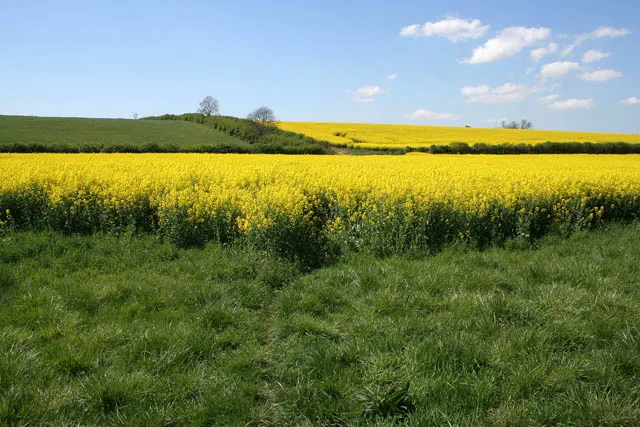
Photo: Kate Jewell, CC BY-SA 2.0, via Wikimedia Commons
Carlton looks different in winter. The hedges are bare, the fields are grey-green, and the footpaths that hide under cow parsley in June become faint lines of mud leading somewhere you had almost forgotten. For anyone who has only ever walked the main road to the shop and back, it is a revelation.
Alan Pritchard has lived in Carlton for 41 years and has rambled most of its footpaths in that time. He is 68, retired from the water board, and walks with a stick that has a small compass on the handle. 'People say there is nowhere to walk round here,' he says. 'There is. You just have to know where the gaps are.'
A walker who knows every gate
Alan started walking the paths seriously after he retired. He began keeping a notebook of stiles, gates and muddy corners, and now sends a short report to the parish council every few months. He is not a campaigner by nature, but he is quietly stubborn about the idea that public paths should stay public.
'These are not just nice-to-have routes,' he says. 'They are part of how the village was put together. The path behind the allotments used to be the way people got to the ford. The bridleway up to Marlow's Copse was a farm track before it was a bridleway. If we stop walking them, they start disappearing.'
That is the thing about lost footpaths. They rarely vanish in one dramatic moment. They get overgrown, a stile falls into disrepair, a landowner puts up a misleading sign, and people stop using them. After a few years, the path is still on the map but not in anyone's feet.
The route: village green to the old ford
This is a simple winter loop of about 3.5 miles, mostly flat, with one short incline and a stretch that can be muddy after rain. Allow 90 minutes to two hours if you are stopping to look at things.
Start: Carlton village green, by the noticeboard.
- Cross the green towards St Mary's Church and take the signed footpath through the churchyard, keeping left of the yew tree.
- Follow the path behind the allotments until you reach the wooden gate at the end of the hedge.
- Turn right onto the bridleway and follow it uphill towards Marlow's Copse. This is the best stretch for birdsong in the early morning.
- At the copse gate, turn left onto the field-edge path. In winter the field is usually fallow, and the path is marked by a line of wooden posts.
- Continue to the old ford, where the path meets the stream. Do not cross the ford in wet weather; take the footbridge to the left instead.
- Follow the stream-side path back towards the village, emerging at the end of Back Lane.
- Turn left and walk back to the green.
Simple route map in words: green → churchyard → allotments → wooden gate → bridleway → Marlow's Copse → field-edge posts → old ford → footbridge → stream path → Back Lane → green.
Mud, stiles and the quiet work of keeping paths open
Alan is keen to point out that footpaths do not maintain themselves. Some are looked after by the parish council, some by the county council, and some depend on the goodwill of landowners. When a stile breaks or a path gets ploughed over, it can take a while for anyone to notice.
'People think someone is paid to walk every path once a week,' he says. 'They are not. If you see a problem, report it. A fallen stile is not going to fix itself.'
He suggests taking a photo of the problem and noting the grid reference if you can, then sending it to the parish clerk or the county rights-of-way team. It sounds bureaucratic, but it works. A few years ago, a path near the ford was almost lost to brambles; after a couple of reports and a volunteer work morning, it was cleared.
There is also a practical etiquette to winter walking. Close gates behind you, keep dogs on leads around livestock, and do not assume a path is private just because it is quiet. Quiet is the point.
What you might see in winter
Winter is not a dead season on these paths. Alan has seen roe deer in the field beyond the copse, tawny owls at dusk near the churchyard, and flocks of fieldfares and redwings stripping the hedgerows. The bare trees make it easier to spot woodpeckers and treecreepers, and the muddy edges are full of tracks: deer, fox, maybe a badger if you are lucky.
'You have to slow down,' he says. 'That is the whole thing. If you walk these paths at the speed of a car, you will see nothing. If you walk them at the speed of a walk, the village opens up.'
Seasonal tips for a safe wander
Winter walking in Carlton is not alpine mountaineering, but it pays to be sensible. Wear boots with a decent tread, take a stick if you are unsteady on uneven ground, and carry a phone. Daylight is short, so start early or take a torch. Let someone know where you are going if you are walking alone.
The ford path can flood after heavy rain, and the field-edge section gets claggy with mud. That is not a reason to stay indoors; it is a reason to wear the right footwear and turn back if the water is higher than your boots.
Most of all, Alan says, do not wait for the perfect day. 'The best walks are often the grey ones,' he says. 'Nobody else is out. You get the paths to yourself.'
These are the quiet corners that make village life special: a gate that sticks, a view across a field, a path that has been walked for generations. They are not dramatic. They are just ours. And this winter, they are waiting.