Muted, Please: The Unwritten Rules of Carlton's Group Chats (Now Written Down)

You know the sound. It's 6.04 on a Tuesday morning, your phone is face down on the bedside table, and it gives that small polite buzz that means 214 people have found something to say before the kettle has boiled.
In Carlton, the group chat has become the village pump. It's where the road closure by the ford gets announced, where a cat called Biscuit is reunited with his people in eleven minutes flat, and where somebody will always, always know which bin it is. It is also where a perfectly ordinary question about a hedge can turn, by 9pm, into forty-two messages, two apologies and one person leaving the group in high dudgeon.
With the clocks gone back and half the village indoors by four o'clock, traffic on the chats has picked up. So we asked the people who run them — and a few members who have seen it all — how digital neighbourliness actually works in Carlton.
Three groups, one village
Carlton doesn't have a group chat. It has several, and they have very different personalities.
There's the notices group, which is strictly announcements: bin collections, roadworks, the church roof, the parish council minutes nobody reads until they need to. There's the general chat group, which is where the marrow glut lives and where someone will confidently identify a bird from a photograph taken through a kitchen window. And there's the street-level group, a smaller, more tactical operation concerned chiefly with parking, parcels and whose turn it is to move the cone.
"The trick is knowing which one you're in," says Helen, who has moderated the notices group since it was about thirty people and a shared spreadsheet. "If you post a photo of a sunset in the notices group, I will move it. Politely. But I will move it."
Anatomy of a bin-day thread
Every village has a recurring drama, and in Carlton it is the bins. Not the bins themselves — the bins are blameless — but the collective, creeping doubt about which one goes out.
A typical thread runs like this: someone asks. Someone else replies with certainty. A third person replies with equal certainty and the opposite answer. Somebody posts a screenshot of the council calendar. Somebody else points out the calendar is for the wrong week. Then, forty minutes later, a neighbour walks past with their green bin and the whole street silently recalibrates.
Dave, who administers one of the street groups, has developed a technique. "I just pin the council link at the top and gently say, 'the app knows, I don't.' It's saved a lot of goodwill."
What the admins actually want
If you have ever wondered what the person with the little crown beside their name is thinking, the answer is usually: not much, but constantly.
"I don't mind the messages," says Priya, who took on the general chat in 2024 after a slightly emotional handover. "I mind the ones that start at half ten at night and end with someone's feelings hurt. Ninety per cent of the job is just noticing when a thread is going that way and quietly changing the subject to something with feathers on it."
Her secret weapon is bird photographs. A blurry picture of a heron on the brook will defuse almost anything.
The rules, more or less
Nobody wrote these down, which is precisely why they need writing down.
Search before you ask. The gritting timetable has been posted four times since October. It will be posted again, but let's not make it five.
Give a location with your lost cat. "Has anyone seen Biscuit" is a lovely message and a useless one. Add the road, add the time, add the fact that he is deaf and will not come when called.
Say thank you in private. Public gratitude is charming the first time and clogs a thread by the eighth. A direct message costs nothing.
Keep voice notes short. Forty-five seconds is a chat. Three minutes is a podcast, and nobody has opted in.
Mind the hour. Anything after 9pm and before 7am had better involve an escaped animal, a burst pipe or a fire.
Offer the tomatoes, don't auction them. "Free to a good home, on the wall by the postbox" is the correct format. Questions about variety, ripeness and provenance can be answered off-list.
Take the argument to the pub. Parking, planning and parish politics are all legitimate village concerns and none of them belong in a thread with a hundred readers who didn't ask.
Report the scams. Anything offering a parcel redelivery fee, a tax rebate, or a suspiciously cheap log burner should be flagged and deleted. Two residents nearly fell for the same fake courier message last spring.
Leave quietly if you must. No farewell speech. No dramatic exit. Just go. You'll be back by March, and nobody will mention it.
When it goes wrong
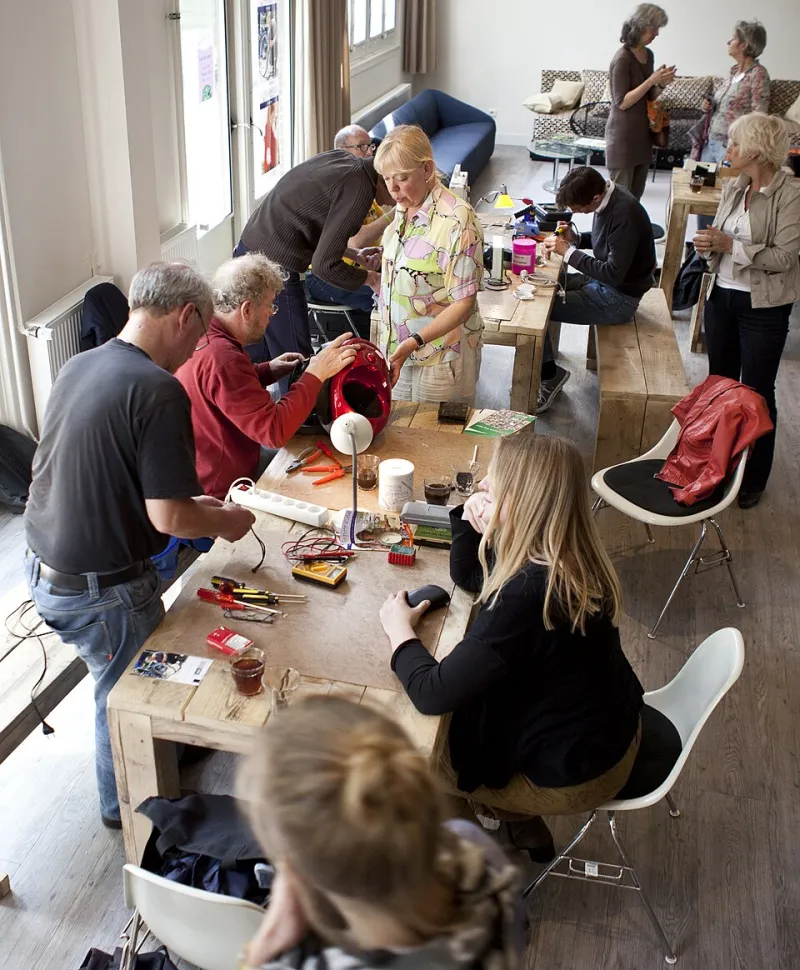
It does go wrong. In February a fairly mild observation about wheelie bins left on the pavement turned into a fortnight of frostiness that spilled into the actual, physical street. The resolution, in the end, was a Saturday morning at the repair café, two cups of tea and a conversation conducted face to face, which is a technology Carlton has never quite abandoned.
"That's the thing people forget," says Helen. "The group chat is not the village. It's a noticeboard with opinions. The village is the bit where you stand in the cold waiting for the bus and somebody lends you a glove."
The quiet art of being a good digital neighbour
The best group chats, in the end, feel like a good neighbour leaning over the fence: brief, useful, occasionally funny, and never so long that you start edging towards the gate.
So post the road closure. Post the spare courgettes. Post the heron. And if you're unsure whether something belongs in the chat, ask yourself a simple Carlton question: would I say this out loud, at normal volume, in the queue at the shop? If the answer is yes, type away. If it's a long one, save it for the walk home.