Mince Pies at Junction Four: The Quiet Mechanics of Carlton's Santa Float
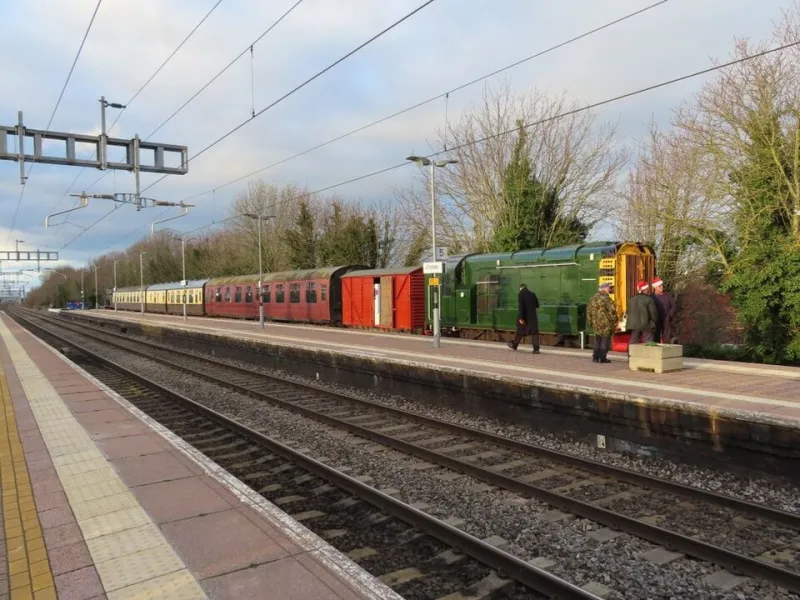
Photo: Bill Nicholls , CC BY-SA 2.0, via Wikimedia Commons
On the last Tuesday of November 2026, the air in the garage behind Carlton recreation ground smells of diesel, old tinsel and iced buns. Six people are standing around a flatbed trailer, and one of them is holding a clipboard the way other people hold a mug of tea — tightly, and with purpose. The sleigh is mostly assembled. The reindeer is in the corner, looking faintly surprised, as it does every year.
This is the quiet bit. By the time the float rolls down Carlton's streets in December, the fairy lights will be doing their thing, the brass players from the village band will have found their gloves, and dozens of children will be waving from gateways in the cold. Tonight, though, it is just the crew, a spreadsheet, and a long list of things that could go wrong.
Fourteen tabs and a pencil
Ray, who has planned the route since the float first took to the streets in the 1990s, opens his laptop on an upturned crate. The spreadsheet has fourteen tabs. Route. Timing. Batteries. Bulbs. Sweets. Buckets. Weather. Pub. First aid. Tractor. Permissions. Refuelling. Spares. Contacts.
"You'd think it was the space programme," he says, not unkindly. "It's a trailer with a man in a red suit on it. But the space programme doesn't have to get down Orchard Close in the dark without taking out a wing mirror."
The route is drawn in pencil first, then typed up, then argued about. Twelve streets over four evenings, with two cul-de-sacs that require a three-point turn and one bend — the one by the old pinfold — that everyone agrees is "fine if you take it slow". The float cannot reverse easily, which means every dead end has to be entered forwards and left the same way. Ray has a laminated map in the cab and a paper copy in his coat pocket, just in case.
The battery question
Sue is in charge of power. Two leisure batteries, charged overnight in her shed, plus a spare in the boot of her car. The fairy lights are LED now, which helps, but the sleigh's illuminated star still draws more than you'd think. "It's not glamorous," she says, taping a connection with the practised air of someone who has done this many times. "But if the lights go out halfway down Pinfold Lane, you've got a lot of disappointed faces and a very dark Santa."
There is also the small matter of the generator, which lives in the trailer but is only used as a last resort. Last year it was needed once, on a damp night in early December. This year Sue has a new plan: a second set of connectors and a torch taped to the trailer bed. "You learn," she says. "Every year you learn something."
The sweet tub doctrine
Dev has the best job and the worst job, depending on your view: he is the keeper of the sweets. One large tub, 600 individually wrapped sweets, no chocolate — it melts, then freezes, then goes white and sad. "Hard sweets, lollies, the occasional foil-wrapped coin thing," he says. "And nothing with nuts unless it's clearly labelled. We had a note from a parent last year, so now it's all in the spreadsheet."
The tub is refilled from the village shop on the corner, which keeps a box behind the counter from the first week of November. Dev has a running tally on his phone. Halfway through the run, he does a stock check by the light of a phone torch. "You'd be amazed how fast a tub goes," he says. "And how many adults ask for one."
Junction four
The route has a rhythm. Down the hill, round the bend by the pinfold, up past the school, then left at Junction Four — the corner of Pinfold Lane and School Road. Without fail, the Wilsons bring out a tray of mince pies and a flask. The float stops for three minutes. Nobody has ever officially scheduled those three minutes, but they are in the spreadsheet now, in a tab of their own.
"It's the bit that makes it feel like Carlton," says Martin, who drives the tractor and has the unenviable task of judging every gap between parked cars. "You can plan a route, but you can't plan a tray of warm mince pies appearing at exactly the right moment."
The pub stop
At the end of each evening, the float parks outside The Wheatsheaf and the crew decamps for twenty minutes. Landlord Kath puts out tea, a plate of something warm, and a collection bucket that has become a fixture of the run. "They come in with tinsel in their hair and cold hands," she says. "It's the least I can do."
The stop is not just about refreshments. It is where the debrief happens: which street was busier than expected, which bulb needs replacing, whether the star is flickering again. It is also where the six volunteers remember why they gave up four evenings in December. "By the third night, you're tired," says Sue. "You get a cup of tea and a bit of cake and suddenly it's fine again."
What the spreadsheet can't capture
The 2026 run is not perfect. It never is. A bulb will blow. A child will ask Santa a question about reindeer that nobody can answer. Someone will forget the spare key to the trailer and have to go back for it. But the spreadsheet, for all its fourteen tabs, is only half the story. The other half is the people standing in the cold in their dressing gowns, the neighbours who wave from windows, and the volunteers who keep showing up.
"You can't put that in a tab," says Ray, closing his laptop. "Well, you could. But it wouldn't be the same."