Twelve Squares of Carlton: The Calendar Committee, the Camera and the December Argument
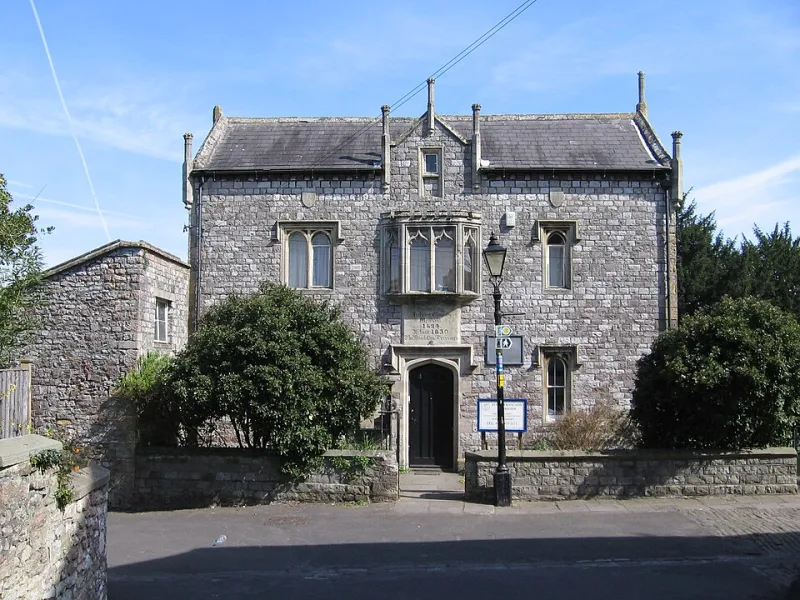
On a Tuesday night in October, eight people gathered in the back room of Carlton Village Hall with a laptop, a projector, two packets of custard creams and a shoebox labelled “Calendar – do not bin”. This was the shortlisting meeting for the new edition of the Carlton charity calendar, and the atmosphere was somewhere between a parish council sub-committee and a very slow episode of a talent show.
The calendar has become a quiet fixture of village life. It is not glossy, it does not have a celebrity foreword, and nobody has ever been papped carrying one. But it sells out every year, usually by the first week of December, and the money it raises has paid for everything from hall roof tiles to a new defibrillator. More than that, it has turned into an accidental archive: a year-by-year record of what Carlton looked like, who was out in the snow, and which bench was holding up best.
The shortlist meeting where nobody agrees (but everybody brings biscuits)
The committee receives around forty photographs each year. Anyone can submit. The rules are deliberately loose: it must be Carlton, it must be taken in the last twelve months, and it must not be a blurry close-up of somebody’s dog unless the dog is doing something genuinely remarkable.
By October, the forty have become a shortlist of twenty. By the end of the evening, they need twelve. This is where things get awkward. Not nasty — Carlton does not really do nasty — but awkward in the way that only a village can be awkward, where everyone is related to somebody who took one of the photographs and everyone has a strong opinion about the correct amount of sky.
The chair, Helen Mercer, runs the meeting with a mix of gentle humour and firm timing. “We are not choosing the twelve best photographs,” she said, tapping the table. “We are choosing the twelve that feel most like us. There is a difference, and the difference is usually a hedge.”
The man behind the lens (and the ladder in his shed)
The bulk of the images come from Alan Whitworth, a retired joiner who has lived in Carlton for thirty-one years and who describes himself, without any apparent irony, as “the unofficial village photographer”. Alan does not use filters. He does not stage shots. He does have a ladder in his shed, a flask in his car and a small notebook in which he writes things like “fog on green – 7.10am – worth a look”.
“I mostly take pictures because I’m already walking the dog,” he said. “You see the light and you think, that’ll be gone in five minutes. So you go back for the camera. The dog has learned to wait. The wife has not.”
Alan has contributed to the calendar for fourteen years. His favourite month, he says, changes depending on the weather and whether the photo in question was taken before or after his knee operation. But he is proudest of a February shot of the postbox on the corner, taken in a late snowfall, with a single set of footprints leading up to it. “That one was pure luck,” he said. “I was going for the paper.”
A year in twelve frames
The new edition opens with January: frost on the village green, the bench under the oak looking like it has been dusted with icing sugar. February is the postbox, footprints and all. March is the allotment shed with a kettle steaming in the doorway — a picture that has already caused one committee member to say, “That’s not March, that’s definitely February,” before being politely overruled.
April is the church path lined with daffodils. May is the village hall fete, caught mid-tombola. June is the pub garden at that exact moment when the light goes golden and everyone looks like they are in a Sunday supplement. July is the recreation ground, with a cricket match in progress and a dog interrupting it. August is the bus shelter in high summer, which sounds unpromising but somehow captures the particular stillness of a village afternoon when nothing is happening and that is the point.
September is blackberry picking along the footpath. October is the lane in leaf-fall, taken by Alan at 8am on a Sunday when the church bells were practising. November is the war memorial, quiet and wet, with a wreath just visible at the edge of the frame. And December — well, December is the one they always argue about.
The December photograph: the friendly row that never quite ends
There are usually three contenders for December. One is the Christmas lights switch-on, all fairy lights and children in hats. One is the tree in the church porch, which is simple and lovely and slightly dull according to the more outspoken members of the committee. And one is the pub window on Christmas Eve, usually taken from across the road, with the firelight showing through the glass and somebody’s nan waving from inside.
This year, the committee went for the pub window. It was not unanimous. It never is. There was a brief and entirely good-natured discussion about whether the pub represented “the true spirit of Carlton” more than the lights switch-on, during which someone said “it’s not a competition” and someone else said “well, it clearly is now”.
“We like a friendly argument,” Helen said afterwards. “It means people care. The December photo is always the one that gets the most comments. Last year someone wrote to us to say the tree was on the wrong side of the porch. We checked. It wasn’t. But we appreciated the passion.”
Why a wall calendar matters
The calendar costs £8 and the print run is 500. It is designed by a volunteer, printed locally and sold at the village hall, the post office and a small table outside the butcher’s on Saturdays. The money goes into a village fund that has supported the hall, the little pantry and the defibrillator. Nobody is pretending it is a major fundraising operation. It is a few thousand pounds a year, carefully spent.
But the calendar does something else. It gives new residents a way into the village — a set of places to recognise, a reason to ask what the bus shelter picture is about. It gives older residents a record of things that have changed: the orchard that became a cul-de-sac, the gate that was repainted, the shed that finally fell down. And it gives everyone a small, cheerful thing to hang on the wall in January.
“People keep the old ones,” Alan said. “I’ve had neighbours bring me a calendar from 2011 and ask me to sign it. I always say the same thing: I only took the photo, I didn’t build the village.” He paused. “Though I did build that shed in March.”
The new edition goes on sale at the village hall on 21 November. If previous years are anything to go by, it will not be there for long. Bring a fiver and a tenner, have a look at the December page, and if you think the pub window is the wrong choice, do let the committee know. Politely. They like that.