Lest We Forget the Village They Knew: Carlton's Remembrance Sunday Walk
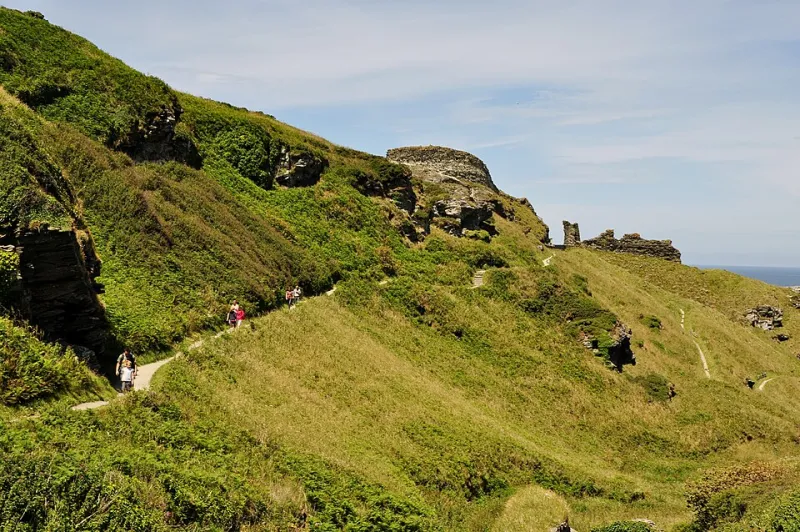
Photo: Lewis Clarke , CC BY-SA 2.0, via Wikimedia Commons
At 10.40 on Remembrance Sunday morning, a loose cluster of coats and scarves gathers outside Carlton village hall. There is no clipboard-wielding guide, no megaphone. Just Margaret from the local history group, a folder of photocopies, and a question she asks every year: 'Who are we walking for today?'
This is not a formal tour. It is a gentle amble through the village to the war memorial, stopping at the ordinary places the men named on it would have known. In 2026, with the leaves still clinging to the horse chestnut by the green, the walk feels less like a history lesson and more like a neighbourhood catching up with its own past.
Starting at the Village Hall
The walk begins where village life always has: the hall, the green, the old school building. Margaret hands out a single sheet — not a list of battles, but a list of streets. 'Most of these men lived within a ten-minute walk of where we're standing,' she says. 'That's the first thing to hold on to. They weren't strangers from a history book. They were the lad from the end of your road.'
We pause by the old school wall. A photocopy of a log book entry from 1914 is passed around: a headteacher noting that a boy had left to work on a farm, another had followed his father into the yard. 'It's easy to think of the memorial as a stone with names on it,' says Margaret. 'But the archive keeps reminding you that these were jobs, families, rent books, school dinners.'
The Names That Anchor the Stone
At the memorial, the group falls quiet. The stone cross stands where it has stood for more than a century, its letters softened by weather but still legible. Margaret reads a few names aloud — not all of them, because the point is not to recite a roll call, but to slow down enough to notice one or two.
There is Arthur, a farm labourer from a family of six. A parish magazine from the time mentions him helping with the harvest before he left. There is William, the postman's son, whose name sits near the bottom of a panel. And there are two brothers, remembered together on the same face of stone, which always makes people pause.
Ken, a resident who has joined the walk for years, brings a photograph in a plastic wallet. 'This is my great-uncle,' he says. 'I only found out he was on here when my mum mentioned it in passing. Now I come every year. It's daft, really — I never met him — but you feel a bit responsible for the name once you know it.'
What the Archive Adds
Back at the hall afterwards, there is tea and a table of archive finds. The local history group has spent the autumn digging through census returns, parish council minutes and old newspaper cuttings. Nothing dramatic — just the everyday texture that makes a name into a person. A trade. A street. A family that later moved away.
'You don't need a grand story,' says Margaret. 'Sometimes a single line in a school log book is enough to make someone real again. The memorial gives you the name. The archive gives you the walk home.'
This year, children from the village school laid small wooden crosses at the base of the memorial, each one labelled with a name. It is a simple thing, but it changes how the stone reads. The names are no longer just carved. They are held, briefly, by small hands.
The Two-Minute Silence
At 11 o'clock, the village stops. The traffic on the nearby road fades. A dog barks once, then thinks better of it. For two minutes, the only sound is the wind in the yew tree and the shift of coats as people stand still.
Then a wreath is laid. Someone reads a short poem. The group disperses slowly, back towards the hall, back towards ordinary Sunday mornings. Ken lingers by the memorial for a moment longer. 'You don't need to be a historian to remember,' he says. 'You just need to stand here for a minute. The rest follows.'