Four Minutes Ahead of Itself: Why Carlton Wouldn't Dream of Fixing the Village Hall Clock
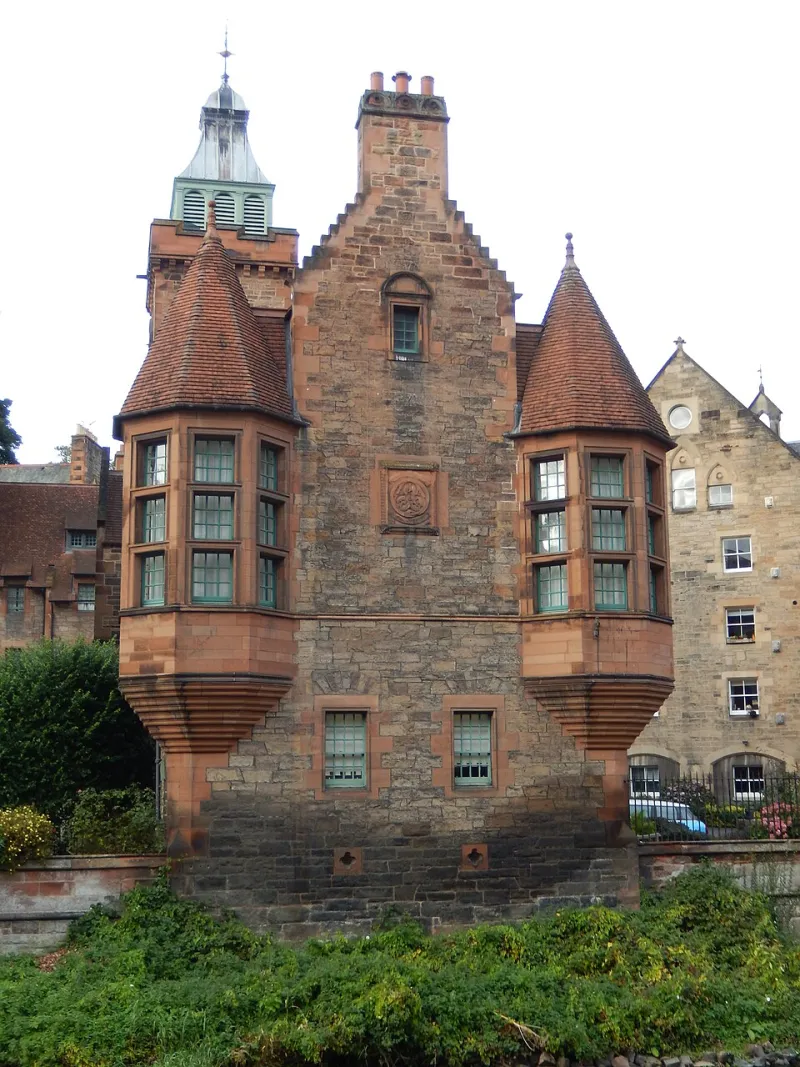
Photo: AlasdairW, CC BY-SA 4.0, via Wikimedia Commons
The Tuesday Key
At 8.40 on a grey Tuesday in November, Ken Marlow unlocks the side door of Carlton Village Hall with a key that has worn smooth in his pocket since 1998. He doesn't switch on the lights. He doesn't check the noticeboard. He walks straight to the cupboard under the stairs, lifts out a crank handle that looks like an oversized bottle opener, and climbs the stepladder to the clock.
The face above the stage is white, black Roman numerals, a little chipped at the four. The pendulum case is oak, the glass slightly warped. Ken fits the crank, turns it forty-two times, and listens. Then he steps down, wipes his hands on his trousers, and says the same thing he says every week: 'Four minutes fast. Just as she should be.'
Nobody argues. Not any more.
A Clock with a Reputation
The village hall clock has been four minutes fast for as long as anyone can remember, and possibly longer. The hall was built in 1923 as a memorial to the men of Carlton who didn't come home, and the clock was part of the original gift — a subscription funded by the WI, the cricket club and a whip-round at the Royal Oak. The maker's plate says Hargreaves of Derby. The mechanism is weight-driven, needs winding every seven days, and has the general temperament of a wet Wednesday: slow to start, steady once going, and not to be rushed.
It is not, strictly speaking, accurate. It is, strictly speaking, four minutes fast.
But here's the thing about Carlton: we don't do 'strictly speaking'. We do 'what works'. And what works, apparently, is a clock that is consistently, reliably, stubbornly four minutes ahead of Greenwich Mean Time.
The Note in the Casing
There are three theories about why.
The first is that the clock was set forward in 1941 for double summer time and nobody ever put it back. The second is that the first winder, a stationmaster called Arthur Pemberton, missed the 7.42 bus by ninety seconds in 1924 and vowed that no clock in Carlton would ever let him down again. The third, and the one Ken favours, is that the mechanism was always a little keen, and the first clockmaker left a note inside the casing: 'She gains a bit. Set her four ahead and she'll see you right.'
The note has never been found. Ken says it was lost in the 1970s when the casing was re-varnished. Doreen from the WI says Ken made it up. Either way, the clock has been four minutes fast for so long that the four minutes are now part of the clock.
The Year Somebody Tried to Fix It
In 2011, a well-meaning parish councillor suggested resetting it. 'For accuracy,' he said, at a meeting in the very room the clock overlooks. The minutes record that there was a 'general murmuring'. The murmuring lasted forty minutes.
The school said the children use it to know when to line up. The bus company said passengers use it to know when to start walking. The vicar said he uses it to time his sermon, which is either eight minutes or twelve, depending on which clock you ask. The chip shop said it was 'none of their business but they'd heard about it'. And Ken, who had been winder for thirteen years by then, said simply: 'If you fix it, people will be late. They've built their lives around knowing it's fast.'
The motion was withdrawn. A laminated sign was nailed under the clock: THIS CLOCK IS FOUR MINUTES FAST. IT IS NOT BROKEN. PLEASE DO NOT ADJUST. The sign was stolen three times. The fourth one is still there, slightly curling at the corner.
What the Village Actually Runs On
The truth is that Carlton runs on the clock's wonky time the way a bicycle runs on a slightly buckled wheel: not perfectly, but steadily, and with a certain amount of character.
The school gate opens at 8.56 by the clock, which is 8.52 by the radio. The 7.42 bus is caught by people who leave when the clock says 7.34. The Remembrance Sunday silence begins when the clock says eleven, which means it actually begins at 10.56, which means the Last Post has to be timed carefully. The Christmas lights switch-on has never once started on time, and nobody has ever blamed the clock.
Four minutes is not much. But it's enough. It's enough to turn a sprint into a stroll, a nod into a conversation, a near miss into a 'morning, Ken'. It's enough to make the village feel like it's running a few minutes ahead of the rest of the world — which, frankly, some of us think it is.
Four Minutes of Common Sense
Ken will be 78 in March. He has trained two under-winders, both of whom have promised not to touch the setting. 'I don't wind it to be right,' he told me, fitting the crank back into its cupboard. 'I wind it to be consistent. There's a difference.'
The difference is four minutes. The difference is also Carlton. We are a village that keeps its clock fast on purpose, or at least on habit, and we are not in a hurry to change either.
So if you're passing the hall and the clock says ten past, it's six minutes past. If it says four minutes to, it's eight minutes to. And if you're ever tempted to adjust it, remember the laminated sign, the stolen signs, the forty minutes of murmuring, and the fact that Ken Marlow knows exactly what he's doing.
Four minutes fast. Never wrong. Just as she should be.