Thursdays, Tippex and the Jumble Sale That Never Was: Inside Carlton's Village Hall Ledger
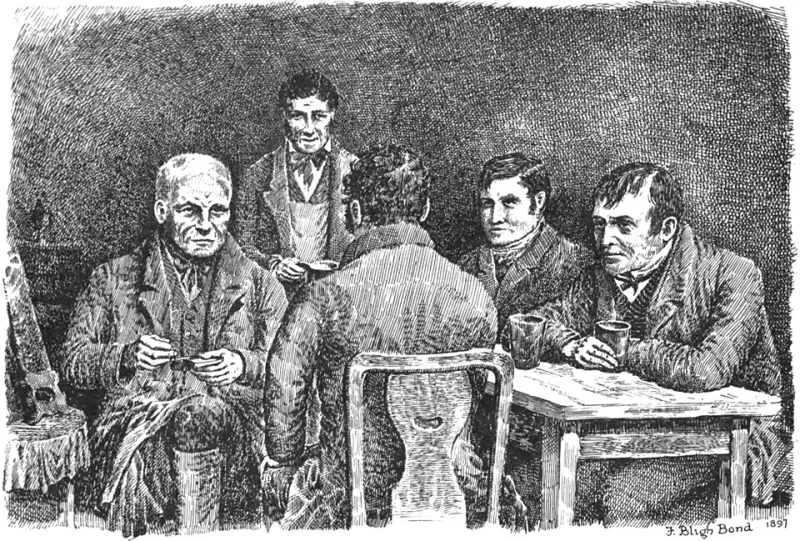
Photo: Unknown artistUnknown artist, Public domain, via Wikimedia Commons
There is a cupboard behind the stage at Carlton Village Hall that smells of dust, old floor polish and, faintly, of the urn. Inside it, wedged between a box of mismatched teacups and a roll of fraying bunting, lives a ledger. Its spine is cracked, its corners are furred, and its pages hold forty-three years of Thursdays, Saturdays and the occasional fraught Sunday.
It is, officially, the booking book. Unofficially, it is the closest thing Carlton has to a diary of itself.
A Book That Begins With a Jumble Sale
The first page is dated March 1983. The handwriting is upright and careful, the pen pressed hard enough to leave a groove. "Jumble Sale — 12 March — £47.20 raised. Thank you to all who helped." That's it. No drama, no elaboration. Just the fact of it, and the gratitude.
Turn a few pages and the village starts to fill in around the edges. A wedding reception in 1986, booked in a looping, excited hand, with a note in the margin: "Caterers arrive 11am — DO NOT LOCK SIDE DOOR." A christening in 1991. A funeral wake in 1998, recorded in a different pen, quieter, with a small cross drawn beside the time.
You can trace the decades by the ink. Biro gives way to rollerball, rollerball to the occasional fountain pen, and then, in the mid-2000s, to the slightly smudged print of someone who clearly preferred a pencil. There are Tippex blots where plans changed. There are crossings-out so emphatic the pen went through the page.
The Handwriting Changes. The Village Doesn't.
What's striking is how the same events keep returning, dressed in different decades. The jumble sale appears in 1983, 1989, 1994, 2002 and 2018, each time with a slightly different set of names in the margin. The whist drive runs for years, then stops, then comes back. The annual parish meeting is always in May, always in the same handwriting for a decade, and then suddenly in someone else's.
And then there's the Thursday keep-fit class. It first appears in 1997, booked by a woman called Margaret whose handwriting is small and fierce. It has run, more or less without interruption, ever since. Different Margaret, same slot. The ledger doesn't explain the handover. It doesn't need to. You can see it in the way the entries shift from "Margaret H" to "Margaret H (new)" to just "Keep-fit — 7pm" in a third hand entirely.
Margin Notes and the Quiet Dramas
The margins are where the real life of the hall lives. Next to a 1993 booking for a children's party: "Bouncy castle cancelled — rain. Hall floor VERY wet. Mop needed." Beside a 2006 quiz night: "Microphone failed. Used megaphone from shed. Worked fine." And in 2011, in capitals, underlined twice: "HALL SMELLS OF DAMP — RING PLUMBER."
There are small triumphs, too. A note from 2015 reads: "New curtains fitted. Thank you to the WI for the raffle money." Another, from 2019: "Hire fee paid in full — first time in three years." You can almost hear the sigh of relief.
Some entries are just names and dates, no explanation. A booking for "Private party — 14 June 2008" with no further detail, and a later note in pencil: "Noise complaint from neighbour. Resolved." That's it. The ledger keeps its counsel.
The Bookings That Never Quite Happened
Not every entry became an event. There are ghost bookings — dates claimed and then crossed out, sometimes with a reason, often without. "Disco — 22 November 1997" is struck through with a single firm line. No explanation. You wonder what happened. Did the DJ let them down? Did the village decide it preferred a ceilidh? The ledger won't say.
There's a 2004 booking for a "film night" that was clearly going to be a big deal — someone had written the film title in block capitals — and then, underneath, in different ink: "Cancelled. No projector." A small tragedy in two lines.
And then there's the booking for a "jumble sale" in 2020 that never happened. The date is written, the time is written, and then a single word: "Closed." The pandemic is there, pressed into the page, without being named.
The Thursday Constant
But for all the dramas and absences, the ledger is mostly a record of ordinary Thursdays. Keep-fit at seven. Badminton at eight. The hall committee on the first Monday of the month. The book club that meets in the small room and always leaves the chairs out.
It's easy to overlook how much of Carlton's social life runs through this one building, and how much of it is recorded in a book that nobody outside the committee ever sees. The ledger isn't a history of great events. It's a history of showing up.
Turning the Page to 2027
Now the committee is thinking about next year. The 2027 pages are already ruled and waiting, and there's a suggestion box by the noticeboard asking residents what they'd like to see in the hall. Someone has already written "more film nights" on a scrap of paper. Someone else has asked for a repair café — though we already have one of those, as anyone who read our piece on it will know.
The ledger will absorb whatever comes, in whichever handwriting. It will record the bookings that happen and the ones that don't. It will keep the margins for the notes that matter. And in another forty years, someone will open the cupboard, sneeze at the dust, and read it all back to us.
If you'd like to add your own entry — or just suggest what 2027 should look like — the hall committee meets on the first Monday of the month. Bring a pen. The ledger is particular about ink.